The shared starting point
Every rulebook starts from the same bike.
It comes from a European standard, EN 15194. The motor may put out 250 watts continuously. It may only help while you pedal, and it has to stop helping at 25 km/h. Go faster than that and you are on your legs alone.
Keep scrolling. The bike on the gauge speeds up as you go.
Sources: national vehicle standard definitions; Department of Infrastructure
The shared starting point
A throttle may only get you rolling.
A legal e-bike can have a throttle. On its own it may take you no faster than 6 km/h, about walking pace. It is there to help you pull away from a standstill or push the bike up a ramp.
Sources: Queensland Government; Transport for NSW
The shared starting point
Cross any one of these lines and the law stops calling it a bicycle.
It becomes a motor vehicle, which needs registration, insurance and a licensed rider. Most of these machines cannot be registered at all, so the only legal place to ride one is private property.
NSW and Queensland both say a high-powered bike stays illegal even when software is holding it to the limit.
Sources: Victoria Police; Transport for NSW; Queensland Government
Who decides
Then eight governments write the rest.
Canberra decides what can be imported. Each state and territory decides what can be ridden on its roads and paths, who can ride it, and what happens to a bike that breaks the rules.
So the answer to a simple question, is this e-bike legal, depends on where you are standing.
How we got here
One standard arrived, slipped away, and came back.
National vehicle rules recognised the European standard in 2012, and over the next five years every state wrote it into its own road rules. The Northern Territory relied on an exemption until 2022.
In January 2021 the federal government rewrote its import rule without naming the standard, saying the document was copyrighted and not freely available. The bike industry says proof of compliance stopped being asked for at the border that July. Sales and imports of e-bikes tripled between 2020 and 2025.
Transport ministers agreed in November 2025 to bring the standard back. The import rule has named it again since 24 December 2025.
Sources: AIHW; 2021 import determination; Bicycle Industries Australia; ACCC; transport ministers, Nov 2025; 2025 import determination
Queensland
Queensland is the only state that asks for a driver licence.
Since 31 August 2026 you must be 16 and hold a licence to ride an e-bike on your own. A learner licence is enough. Children aged 12 to 17 can ride with a parent, grandparent or guardian supervising. Under-12s can ride only in designated recreation areas such as rail trails.
The bike must be built to the European standard and carry a label saying so. Older 250-watt bikes without one stay legal until 28 February 2027 and can be inspected and labelled for up to $70.
Footpaths are open to e-bikes at no more than 12 km/h. Riding an illegal bike is a $621 fine, and police can seize and destroy it.
Sources: Queensland Government; assurance scheme; fines; StreetSmarts
Queensland · why and when
An investigation by MPs produced the strictest rules in the country.
In May 2025 Queensland’s Parliament asked a committee of MPs to investigate, after injuries on e-scooters and similar devices more than doubled in three years. The committee heard that twelve people died in e-mobility crashes in Queensland in 2025: eight on e-scooters and other personal mobility devices, three on illegal electric motorbikes and one on a legal e-bike.
The committee blamed the 2021 import change for letting high-powered machines into the state, and made 28 recommendations. The government accepted them all, some in principle.
The first version of the law banned under-16s outright. After more than 3,000 people and groups wrote to Parliament about it, it was amended: supervised riding from 12, a footpath limit of 12 km/h instead of 10, and an inspection scheme for bikes already on the road.
Sources: Queensland parliamentary inquiry; committee report on the Bill; Queensland Government, June 2026
Queensland · the fight
Twelve deaths in 2025. One was on a legal e-bike.
The government’s own explanatory notes for the new law break down the 12 deaths. Eight were on e-scooters and similar devices. Three were on illegal electric motorbikes. One was on a legal e-bike.
Media reports identify the one legal e-bike death as a 79-year-old woman whose e-bike collided with a car on Bribie Island in July 2025. Police said both were travelling east on Goodwin Drive, Bongaree. No finding of fault has been published.
So the strictest e-bike rules in the country were written in a year when legal e-bikes were the smallest part of the toll. That became the heart of the fight.
Sources: explanatory notes to the Bill, 2026; The Guardian, 1 Sep 2026; Queensland Police, 14 Jul 2025
Queensland · the fight
Often, the “e-bike” in the headline was not one.
Many of the crashes that drove the debate were reported as e-bike crashes. Police later described the machines as electric motorbikes or dirt bikes. Often it was the police release itself that said e-bike.
The Queensland MPs’ committee noted that some devices are wrongly described as e-bikes, and the transport department admitted there was considerable confusion about the term. A Logan council officer told MPs these machines show up in the press frequently as e-bikes.
Scroll on. Each headline’s own story, or the police, says what the machine really was.
Sources: each headline links from the notes at the end; Report No. 21; hearing, 24 April 2026
Across Australia
It isn’t just Queensland.
We checked 27 headlines from five states and the ACT. In nearly every media story, the article itself names the real machine. Only the headline says e-bike.
All four child deaths on this list were headlined as e-bike crashes. In each one, police either described an electric motorcycle or dirt bike, or charged the rider with unregistered-vehicle offences. On the same day, some outlets got it right while others did not, and several later changed the word without a correction note.
No one has counted how often this happens, so these are examples, not a rate. No record shows the headlines changed the law either; one government MP told Parliament they did not act on a headline. What critics did say is that the law ended up treating legal e-bikes like the machines in these stories.
Sources: each headline links from the notes at the end; Hansard, 4 June 2026
Queensland · the fight
Then Queenslanders had their say.
Before changing the law, the committee of MPs asked the public for their views. Anyone could write in: riders, parents, doctors, councils, bike shops, safety groups.
It received 1,223 written submissions. Its report then recommended a minimum age of 16, a learner licence for every rider and a 10 km/h limit on footpaths.
Sources: inquiry page and submissions list; Report No. 21
Queensland · the fight
The draft law drew even more.
In March 2026 the government turned those recommendations into a draft law, and the committee asked the public for views again.
This time 3,029 people and organisations wrote in, in less than three weeks. Another 1,821 people signed the same form letter, asking MPs to drop licences, age limits and path speed limits for pedal-assist bikes.
Sources: Report No. 26; inquiry page and submissions list
Queensland · the fight
Then riders took it to the streets.
More than 250 riders crossed the Story Bridge to Parliament House on 1 April 2026, and more than 100 did it again on 7 May. That second ride is in the ABC News report playing behind these cards.
Bicycle Queensland said the draft law would make the state the hardest place in the world to ride a legal e-bike. Disability groups said many people with intellectual or cognitive disability struggle to get a learner licence at all.
Use the sound button in the corner to hear it.
Sources: Green Left, 2 April 2026; ABC News, 8 May 2026; Bicycle Queensland submission; Queenslanders with Disability Network
Queensland · the fight
Doctors pushed the other way.
When the government softened the draft law to let supervised 12 to 17 year olds ride, AMA Queensland said it put the state right back where it started. Parliament passed the law 52 votes to 35 on 4 June 2026. Labor and the Greens voted against.
Since then the government has turned down every petition asking for changes, but in October 2026 it promised a review of how the laws are working. It says children kept in the Queensland Children’s Hospital after e-scooter or e-bike crashes fell from 16 in April to June to 7 in July to September. The hospital’s own chart shows 12 in the same months of 2025. It has not said how many were on e-scooters, e-bikes or illegal machines.
Sources: ABC, 2 June 2026; Hansard, 4 June 2026; Minister’s reply to a petition, 26 October 2026; Queensland Government, 20 October 2026; Queensland Children’s Hospital figures, tabled 28 October 2026
Queensland · since July
Since July, at least five more people have died.
Police releases record at least five deaths in five separate crashes between July and mid-November 2026. Three were on e-scooters and one on an electric dirt bike.
The fifth was a man riding an e-bike who collided with a car. Police have not said whether his bike was legal. Queensland has not published a count of 2026 deaths by device.
Sources: Queensland Police releases, 12 July, 16 July, 30 August, 24 September, 14 October
Queensland · the argument
Were legal e-bikes the problem?
The MPs’ own report said compliant e-bikes carry far lower risk than overpowered machines. It still recommended the same age limit and licence for every device. The government’s reasons: one set of rules is easier to enforce, and illegal machines can look just like legal ones.
The data could not settle it. Queensland Health told MPs it cannot reliably tell e-bikes from ordinary bicycles in its records, so most injury figures in the debate were about e-scooters. Transport safety researcher Professor Narelle Haworth told the inquiry there was no evidence for rules on legal e-bikes that bicycles do not face.
A count of Queensland’s devices by the University of Queensland came out in October 2026, after the laws had passed. It found about 970,000 devices, 61 per cent of them e-bikes, and roughly half compliant by their owners’ own account. More than half of the people who mainly ride them are 50 or older.
Sources: Report No. 21, p. 97; explanatory notes; Queensland Health briefing, 20 January 2026; hearing, 27 April 2026; University of Queensland, The State of E-Mobility in Queensland; UQ release
New South Wales
NSW is the only state where a 500-watt e-bike is legal.
The limit is twice the national figure, and it is temporary. From 1 March 2029 only bikes certified to the European standard will be legal. That rules out every 500-watt bike, and any 250-watt bike without the certification.
There is no minimum age and no licence. Riders 16 and over must stay off footpaths unless they are with a child under 16.
Since 21 August 2026 police can seize an illegal e-bike on the spot and have it crushed.
Sources: Transport for NSW; NSW Government FAQs; where you can ride
New South Wales · why and when
It raised the limit for hills and heavy loads, then changed its mind.
In February 2023 the Coalition government doubled the limit to 500 watts. Transport for NSW said the aim was to help parents carrying children, riders with heavy loads and people in hilly areas. The bike industry advised against it.
In February 2025 a committee of NSW MPs, which had spent months taking evidence from the public and experts, reported that fat-tyre bikes were raising serious safety concerns for pedestrians. In a government survey, 57 per cent of e-bike owners said theirs was over 250 watts.
In December 2025 the Labor government said the higher limit had brought in a wave of high-powered bikes that were unsafe for children and hard for police to identify. In February 2026 it gave owners until March 2029, three years, the typical life of an e-bike.
Sources: NSW parliamentary inquiry; NSW Government, Dec 2025; NSW Government, Feb 2026
New South Wales · what’s next
NSW has settled the bike. It hasn’t settled the rider.
The machine is decided: from March 2029 only bikes certified to the European standard stay legal. Shops already have to tag every e-bike as compliant or not, and since August, the minister says, police have seized 73 illegal bikes and crushed 35.
Who can ride it is not. The minister told Parliament on 11 November 2026 that the government is examining a minimum age of 12 and consulting on it, but would not commit to legislating by Christmas. Cycling groups say no decision is expected before the March 2027 election. Whether young riders can carry passengers is part of the same review.
Also still open: compulsory insurance, which the state’s productivity commission advised against in August, and private e-scooters, which remain illegal.
Sources: NSW Hansard, 11 Nov 2026; NSW Fair Trading; NSW Productivity and Equality Commission; shared e-bike rules; Transport for NSW, e-scooters; Bicycle NSW
Western Australia
In Western Australia you must be 16 to switch the motor on.
The road code says a person under 16 must not ride with the power assistance engaged. The Road Safety Commission puts it more simply: riders must be 16 or older to use an e-bike.
The legal bike is the 250-watt pedal-assist standard. WA also still allows other power-assisted bikes of up to 200 watts, which here can even be petrol.
Cyclists of any age may use footpaths unless a sign says otherwise. A bike over the limit is an unlicensed motor vehicle: the fine is $500, and police may seize and dispose of it.
Sources: WA Road Safety Commission; Road Traffic Code 2000, regulation 228
Western Australia · why and when
The age rule is 25 years old. The crushing came later.
The under-16 rule was in the Road Traffic Code when it began on 1 December 2000, long before today’s e-bikes. We could not find a stated reason for it.
The seizure power arrived in January 2017 and was aimed at unlicensed trail bikes, after complaints rose 90 per cent in three years. From late 2022 police turned it on overpowered e-scooters, and from 2024 on e-bikes. Of 453 devices seized by August 2025, 28 were e-bikes.
A committee of WA MPs looking into e-scooters widened its investigation to e-bikes in August 2025, after a pedestrian was killed by an unregistered electric dirt bike. It made 33 recommendations. The government backed 32 but has not yet changed the rules. NSW has since copied WA’s seizure model.
Sources: WA parliamentary inquiry report; WA Government, March 2026; NSW Government, Feb 2026
Victoria
In Victoria anyone can ride one, but mostly not on the footpath.
A legal e-bike here is the standard 250-watt pedal-assist bike. People of any age can ride one without a licence. No label is required, though the government tells buyers to look for one.
Riders aged 13 and over must keep off footpaths unless they are supervising a child of 12 or under.
Victoria has no seize-and-crush law. A bike over the limit is an unregistered motor vehicle: the fine for that is $1,046, and riding without a licence is a separate offence.
Sources: Transport Victoria; Victoria Police; bicycle road rules; Fines Victoria
Victoria · why and when
Victoria adopted the standard in 2012 and has left it alone.
It acted early, on 18 September 2012, and the definition has not changed since. Victorian law does not spell out the numbers. It points to the national vehicle standard.
What has moved is enforcement. Police began an operation in central Melbourne in August 2025, saying recorded e-bike collisions had risen from 79 in 2023 to 144 in 2024. Converted e-bikes were banned from trains that December because of battery fires.
The government has announced no change to who can ride or what can be ridden. Victoria is part of the national framework that ministers are due to consider by the end of 2026.
Sources: 2012 road rules amendment; Transport Victoria, Dec 2025; transport ministers, May 2026. Collision figures are from a Victoria Police statement of 6 August 2025 that is no longer on its website.
South Australia
South Australia lets e-bikes on the footpath at any age.
The legal bike is the 250-watt standard, or an older 200-watt class. South Australia has not made the European standard itself a legal test, so no label is needed. There is no minimum age and no licence.
Riders of any age can use footpaths, and there is no separate speed limit for them there.
Riding an illegal e-bike is a $384 fine, and fines for an unregistered ($502) and uninsured ($927) vehicle can be added. Police can impound the bike but need a court order to destroy it.
Sources: SA Government; cyclist road rules; review discussion paper
South Australia · why and when
South Australia is deciding right now.
The 250-watt pedal-assist class became legal here in January 2014, and the rule has barely moved since. In June 2026 the government added e-bikes to its review of e-scooter laws, citing safety concerns about illegal e-bikes.
On the table: adopting the European standard and its label, a minimum age, a learner’s permit, speed limits on paths, and letting police seize and destroy illegal bikes. Consultation closed on 16 August 2026. No decision has been published.
The department’s own paper counts 57 casualty crashes involving an e-bike from 2020 to 2024, and says the data cannot tell a legal bike from an illegal one.
Sources: YourSAy review page and discussion paper; SA Department for Infrastructure and Transport
Tasmania
Tasmania treats a legal e-bike like any other bicycle, footpaths included.
The legal bike is the 250-watt standard, or an older 200-watt class weighing under 50 kg. No licence is needed and no minimum age is set.
A legal e-bike can go wherever a bicycle can, and in Tasmania that includes footpaths.
A bike over the limit may be treated as an unregistered, uninsured motor vehicle. The on-the-spot fine for an unregistered vehicle is $266.25, and the bike may be seized.
Sources: Transport Tasmania; Road Safety Advisory Council
Tasmania · why and when
Tasmania considered more power for its hills, then dropped the idea.
Tasmania adopted the 250-watt standard on 11 September 2014, lifting its limit from 200 watts. In 2023 the government promised to review whether to go higher, pointing to the state’s hilly terrain. It was the same argument NSW had used that year.
By April 2026 the mood had turned. The minister told parliament there were growing safety concerns about high-powered devices, the review would not be finished, and Tasmania would work through the national framework.
One thing did change: petrol-engined bicycles have been banned outright since 1 July 2024.
Sources: 2014 amendment Act; e-bike regulations review; Legislative Council Hansard, 16 April 2026
Australian Capital Territory
The ACT treats a legal e-bike exactly like a bicycle.
Two kinds are legal: the 250-watt pedal-assist bike, and an older 200-watt class that weighs under 50 kg and has to be pedalled at any speed.
No minimum age appears in the rules, and the minister says they are the same as for ordinary bicycles. Footpaths and shared paths are open, with a 10 km/h limit at crossings.
A bike over the limit may be classed as a motor vehicle and kept to private property. The fine for using an unregistered vehicle is $750. Police can seize one where warranted. The minister says they take an education-first approach.
Sources: Transport Canberra; ministerial answer, 2026; ACT offences regulation
Australian Capital Territory · why and when
Canberra let in more powerful bikes in 2013, for hills and disability.
Until then the limit was 200 watts. The 2012 federal change made 250-watt pedal-assist bikes legal to import but not legal to ride in the ACT.
The Assembly fixed that on 23 May 2013. The government said the bikes were valued by people who live in hillier areas or have a disability, and came with stricter safety requirements than older electric bikes.
Nothing of substance has changed since. Asked in February 2026, the minister said there were no plans to amend the rules and the government was watching what others do.
Sources: 2013 amendment Act and explanatory statement; ministerial answer, 2026
Northern Territory
The Northern Territory has the lightest rulebook.
Territory law recognises a bike built to the European standard, and separately any pedal bike with a motor of up to 200 watts. The government’s own guidance says simply: 250 watts, limited to 25 km/h.
No minimum age is set. Riders of any age can use footpaths unless signs ban bicycles. It is also the only place where adults may ride without a helmet on footpaths and shared paths.
Over the limit, the bike is a non-complying motor vehicle. Fines for an unregistered vehicle start at $300. We found no power aimed at seizing e-bikes.
Sources: NT Government (read from an April 2026 archive copy); Traffic Act 1987; Traffic Regulations 1999
Northern Territory · why and when
The Territory wrote the standard into law only in 2022.
A 200-watt limit was already in Territory law by 2006. In 2013 police cracked down on petrol-motor bicycles, saying some could pass 60 km/h.
In November 2014 the motor vehicle registrar exempted bikes built to the European standard from registration. That administrative fix was written into the Traffic Act on 4 May 2022, to remove inconsistencies between two Acts.
Nothing has changed since, and no review of e-bike rules has been announced.
Sources: NT Police, 2013; Traffic Act 1987 and amendment history
Side by side
Put together, the power limit is the simple part.
Seven of eight governments set it at 250 watts. NSW is the exception until 2029.
An older 200-watt class also survives in Victoria, SA, WA, Tasmania, the ACT and the NT. Queensland abolished it on 1 July 2026. Those bikes are now rare in shops.
Source: state and territory transport pages, read 12 and 13 November 2026
Side by side
Who is allowed to ride splits the country.
Six governments set no minimum age. Western Australia has kept under-16s off the motor since 2000. Queensland went further in August 2026: 16 and a licence, or supervised from 12.
Two more may follow. NSW promised a minimum age of between 12 and 16. In November 2026 the minister said it was examining 12, but would not commit to legislating by Christmas. South Australia’s review asks the same question.
Sources: Queensland Government; WA Road Traffic Code, regulation 228; NSW Government, Feb 2026; NSW Hansard, 11 Nov 2026; SA review
Side by side
Footpaths split it a different way.
Six governments let any e-bike rider use the footpath. Queensland is the only one with a footpath speed limit of its own: 12 km/h.
NSW and Victoria, the two biggest states, keep footpaths for children and the people riding with them.
Sources: NSW Government; Transport Victoria; Queensland Government; SA Government; WA Road Safety Commission; Tasmania; Transport Canberra; NT Traffic Regulations
Side by side
And what happens to an illegal bike depends on who stops you.
Three states have a fast track: police take the bike and it is destroyed. WA did it first. Queensland followed in July 2026 and NSW in August. In its first three months Queensland seized 558 e-bikes and e-scooters.
Everywhere else an illegal e-bike is handled as an unregistered motor vehicle. On-the-spot fines start at $266 in Tasmania and reach $1,046 in Victoria. In the Northern Territory it depends on which bracket police apply, from $300 up to $1,500.
Sources: Queensland Government, Oct 2026; NSW Government, Oct 2026; WA Road Safety Commission; SA discussion paper; Fines Victoria; Tasmania; ACT minister
At the border
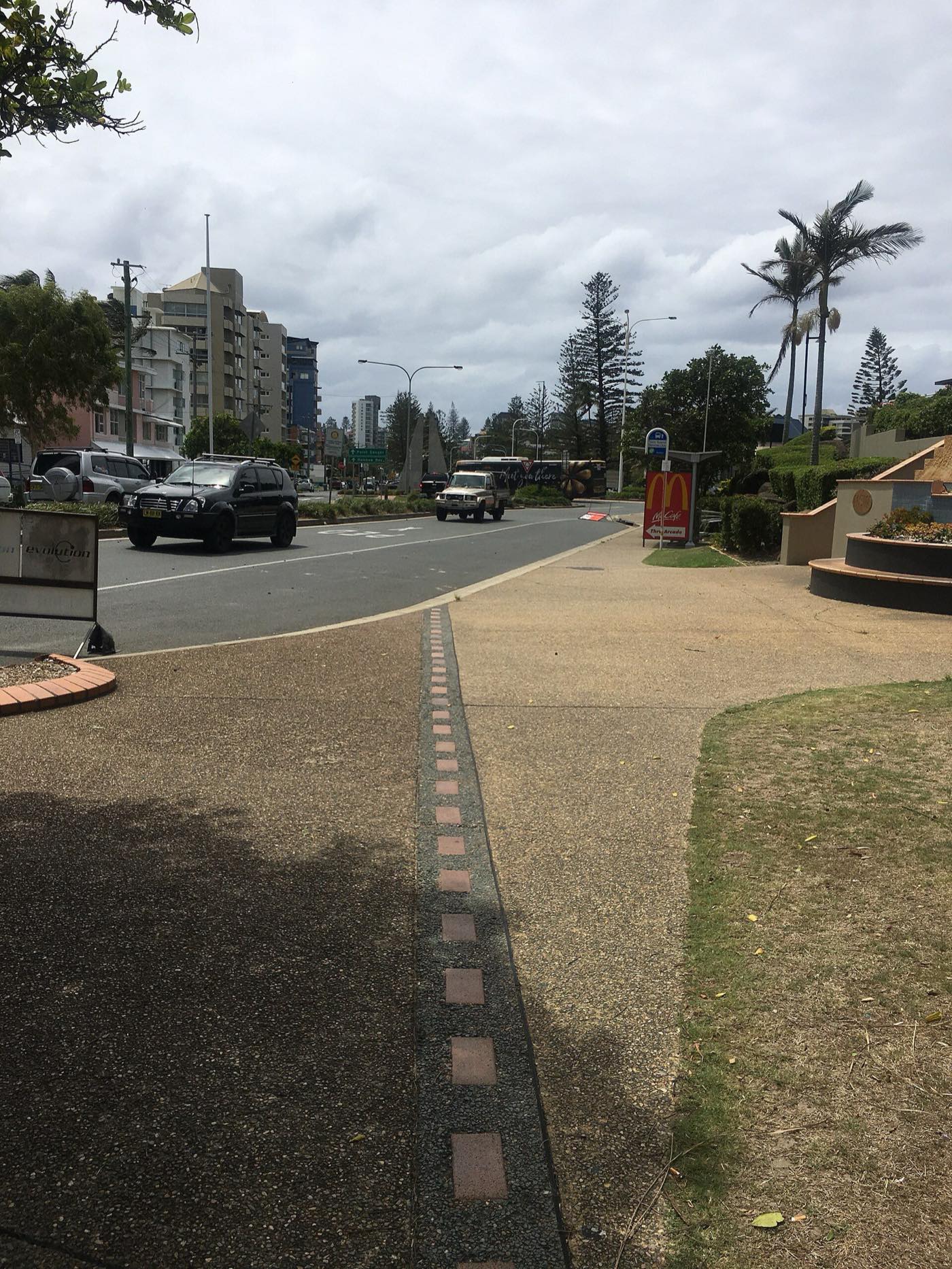
Tweed Heads and Coolangatta are one town with a state line through it.
Ride a 500-watt e-bike north across that line and nothing about the bike changes. Its legal status does.
On the NSW side it is a legal bicycle until 2029. On the Queensland side it is a prohibited bike.
Sources: Transport for NSW; Queensland Government; StreetSmarts
At the border
The rider can become illegal too.
A 14-year-old on a fully certified bike can ride alone in NSW. Across the line, the same child on the same bike needs a parent, grandparent or guardian supervising.
Sources: NSW Government; Queensland Government; Queensland fines
Why it matters
Every year, more of the bikes on the road are e-bikes.
Every March, Bicycle Network volunteers count riders at street corners across Australia during the morning peak. Since 2024 they have counted e-bikes separately.
In 2024 e-bikes were 10.8 per cent of the bikes counted. By 2026 they were 16.7 per cent, about one in six. The e-bike count itself rose by about a quarter, even though fewer sites were counted.
Pedal bikes make up the rest, and their share is falling. E-scooters are counted separately, and have added about 5 to 6 per cent on top of the bikes each year.
Source: Bicycle Network Super Tuesday counts, 2024 to 2026, via the Active Travel Data Explorer (a prototype). Morning-peak counts at every site counted that year. Shares are of bikes and e-bikes counted; scooters are counted on top.
What happens next
The rules are still moving.
The federal government has asked the consumer regulator, the ACCC, to design a national safety standard for e-bikes on sale. Its leading option is the same bike this story started with: 250 watts, built to the European standard. Consultation closes on 30 November 2026.
That standard would govern what shops can sell. Who can ride, and where, would still be up to each state.
Sources: Assistant Minister Leigh, 6 Nov 2026; ACCC consultation; transport ministers, May 2026
If you remember one thing
Five checks that hold in every state.
A bike that passes all five is legal to ride anywhere in Australia.
The rider is a separate question. Queensland and Western Australia set a minimum age, and footpath rules change at almost every border.
Sources: Transport for NSW; Queensland Government; WA Road Safety Commission